
Institutional Overview
For Funders & Partners
A concise overview of IMPACT Black Kidney Health — an initiative of Nicole Washington Ministries — for foundations, healthcare organizations, corporations, churches, community organizations, and philanthropic partners.
Organization
Nicole Washington Ministries
Initiative
IMPACT Black Kidney Health
Organization
IMPACT Black Kidney Health is an initiative of Nicole Washington Ministries. Nicole Washington Ministries has historically been sustained through the commitment and resources of its founder and is now developing philanthropic and institutional partnerships to expand the reach of this work.
Mission
"To bring trusted kidney-health education, early-detection awareness, patient and caregiver support, transplant information, advocacy, and community-based resources directly to Black churches, families, and communities."
The Need
A Disproportionate Burden of
Kidney Disease
The national health facts below, drawn from authoritative public-health and medical organizations, describe the disparity that IMPACT Black Kidney Health exists to address. These are national statistics from the named sources — not IMPACT's own program outcomes.
Black Americans have the highest rate of kidney failure of any racial or ethnic group in the United States, and tend to develop kidney failure at a younger age.
National Institute of Diabetes and Digestive and Kidney Diseases (NIDDK)High blood pressure and diabetes are among the leading causes of chronic kidney disease and kidney failure — conditions that disproportionately affect Black American adults.
Centers for Disease Control and Prevention (CDC) · National Kidney Foundation (NKF)Chronic kidney disease often develops silently, with no early symptoms — which is why early detection through blood pressure, blood-sugar, and kidney-function testing matters so much.
National Institute of Diabetes and Digestive and Kidney Diseases (NIDDK)Early detection and management of kidney disease can slow or prevent progression, so bringing trusted information and early-awareness resources closer to communities carries real potential to help.
Centers for Disease Control and Prevention (CDC) · American Kidney Fund (AKF)Health facts are supported by the authorities named above; see the IMPACT page's Sources & References for the full list of trusted organizations.
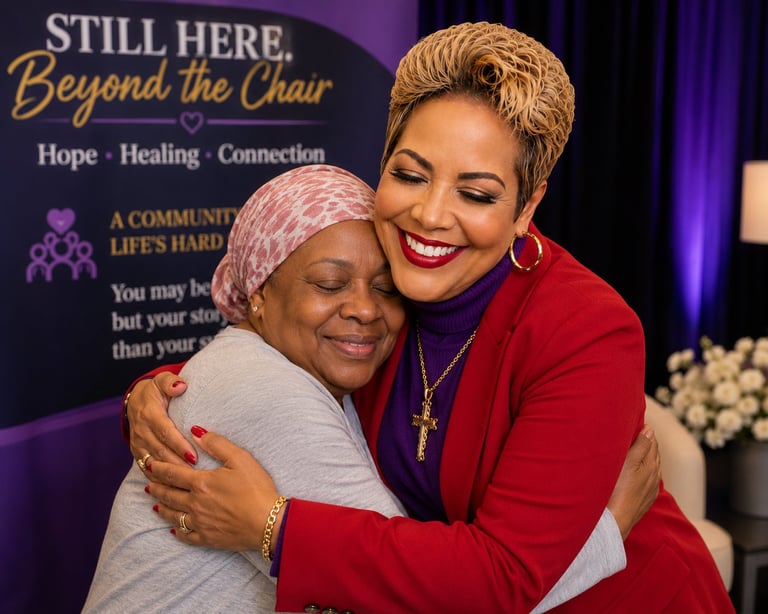
Real people. Real community. Real support.
Who We Serve
Reaching the People Carrying a
Disproportionate Burden
IMPACT Black Kidney Health is designed to reach Black individuals and families disproportionately affected by kidney disease — particularly people who may have limited access to trusted kidney-health information, early-awareness resources, patient support, and culturally relevant community education.
What We Do
The IMPACT Program
Model
IMPACT brings education, early-detection awareness, support, and advocacy together so that families are informed and never left to carry kidney disease alone.
Know Early
Kidney-health education, family-risk awareness, and questions to take to healthcare professionals.
Kidney Health Education
Clear, trusted education in language people can use to understand their bodies and their options.
Patient & Caregiver Support
Encouragement, support gatherings, practical education, and resource navigation for the whole journey.
Transplant Information
Transplant-evaluation awareness, living-donor education, myth correction, and questions for transplant centers.
Advocacy
Standing for delayed-diagnosis awareness, patient rights, respectful treatment, and informed participation in kidney care.
Community Engagement
Church partnerships, community forums, kidney-health conversations, and actions that reach people where they gather.
Trusted Resources
Connections to verified kidney-health resources and authoritative guidance for every stage of the journey.
Funding Priorities
What Funding Makes Possible
With philanthropic and institutional support, IMPACT Black Kidney Health can expand its capacity to bring trusted education, early-detection awareness, patient and caregiver resources, transplant information, advocacy, and community-based outreach directly to the people who need it.
Community kidney-health education and outreach
Educational materials and resource distribution
Church and community partnerships
Patient and caregiver support resources
Volunteer and community-health ambassador training
Digital education and resource development
Outreach events and community programming
Program coordination and administrative capacity
Data collection and program evaluation
Future facility acquisition, preparation, equipment, and program infrastructure
These represent areas where support would expand the work. No dollar amounts are presented here, and none of these items are implied to have already been funded.
How We Will Measure Impact
Good Intentions Should Lead to
Measurable Results
As IMPACT Black Kidney Health expands, evaluation will be built into the initiative. We will measure both the reach of the work and what participants learn, understand, and do as a result.
People reached through education and outreach
Churches and community organizations engaged
Educational resources distributed
Community-health ambassadors trained
Patient and caregiver resource connections
Participants who identify kidney-health numbers and questions to discuss with a qualified healthcare professional
Connections to trusted kidney-health and transplant resources
Community and institutional partnerships developed
Participant feedback and stories
Measurement Reflects Funded Scope
Program goals and annual targets will be established according to funded program scope and available resources. These are forward-looking measures — not claims of current accomplishments — so that progress is reported accurately as the work grows.
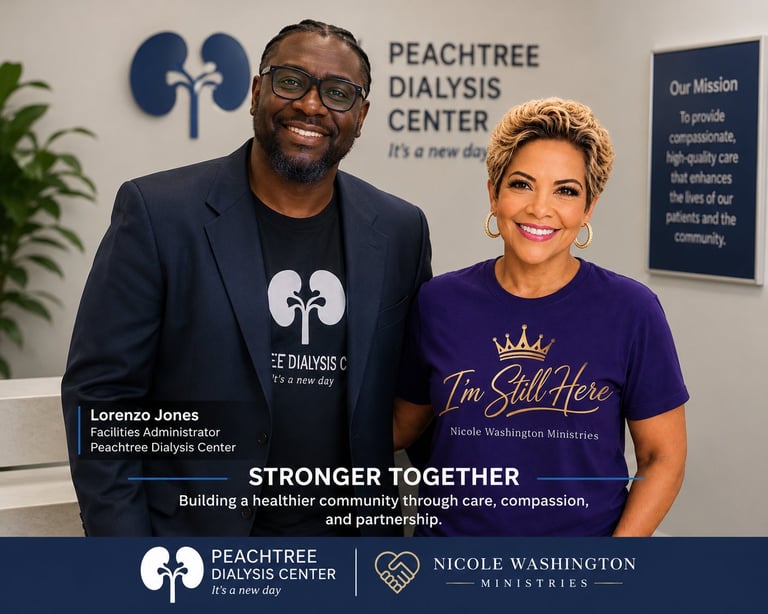
Stronger Together — partnership as the way the work reaches people.
Community Partnership Model
Working Through the Places
Families Already Trust
For generations, Black churches have been places of faith, information, organizing, care, and survival. IMPACT partners with the trusted places already in the community — through churches and faith communities, community organizations, healthcare organizations, dialysis communities, civic organizations, schools, and other appropriate partners — without asking pastors or volunteers to become medical providers.
Institutional partners expand access to trusted kidney-health education, support, advocacy, and community-based resources — reaching the people who carry the heaviest share of this burden, closer to home.
Future Facility & Capital Vision
A Home for
IMPACT
IMPACT Black Kidney Health is growing beyond a website. Nicole Washington Ministries is exploring acquisition and development of a future physical home for this work — a place where kidney-health education, patient and caregiver support, community programs, advocacy, training, partnerships, and outreach could come together under one roof.
Potentially included
Potential property acquisition
Facility preparation & renovation
Accessibility
Equipment & technology
Educational & meeting space
Program infrastructure
Community outreach capacity
The facility vision is one of IMPACT's legitimate funding priorities. No property acquisition has been completed, and the location and details of any potential facility remain confidential until the Publisher authorizes their disclosure.
Partnership Contact
Let's Begin a Conversation
About Partnership
IMPACT Black Kidney Health welcomes conversations with foundations, healthcare organizations, corporations, churches, community organizations, and philanthropic partners interested in expanding access to trusted kidney-health education, support, advocacy, and community-based resources.
Institutional & philanthropic partnership
Program funding, partnerships, advocacy, and expanding access to trusted kidney-health resources.
Facility & capital vision
Exploring a future physical home for the work — the vision is public; the location remains private.
Organizational overview
Download the Nicole Washington Ministries Organizational & Funding Overview for the broader organization and its funding priorities.